 English
 Français
 Deutsch
 Nederlands
 Italiano
 Español


- -20%
€399.20
€499.00


Signature Days | Up to 40% off | October 20–November 2
Pay in 3 or 4 interest-free installments
Free delivery on orders of €500 or more*
A small china cabinet offers useful vertical storage in a compact design. With a glass door or solid front, it organizes dinnerware without taking up too much width.
A small china cabinet provides storage within a narrow footprint. It makes use of a short wall or corner without the bulk of a large display cabinet. We look for understated elegance, carefully chosen materials and functionality that supports everyday habits over the years. Design matters, but it should always make the cabinet easy to use.
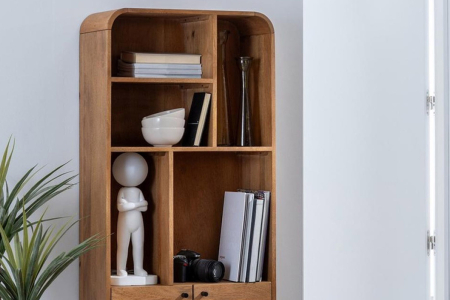
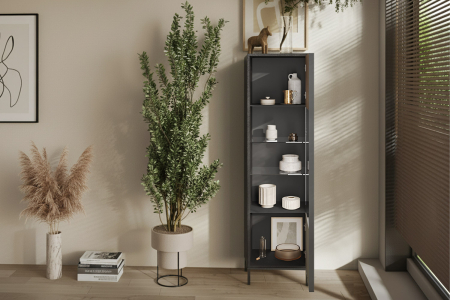
The selection includes narrow solid mango wood models and a version with a glass door, suited to a curated collection of dishes and objects. This variety lets you start with the actual layout of your dining room, then narrow down the shape, capacity, and finish. To explore more options, visit the small sideboards category and compare proportions rather than focusing only on style.
Compactness mainly concerns width. The height and depth must also work with the ceiling, baseboards and space in front of the cabinet. Before deciding, measure the available length and width, and note the baseboards, outlets, radiators, doors and windows. A well-designed piece remains appealing when it makes everyday tasks feel effortless. A simple scale drawing helps you visualize the height, depth and door clearance rather than relying on a rough impression.
Leave comfortable room to move around and check the furniture in its most space-demanding configuration: doors open, chairs pulled out, or tabletop extended. The tall display cabinets category may offer another option if the capacity, shape, or material you need does not quite match what you first had in mind.
Solid wood brings warmth; glass lightens the front and lets you display a few carefully chosen pieces. Your choice depends on the atmosphere you want, the room’s light and the materials already present. Pronounced grain adds texture; a light finish makes the piece feel less bulky; a matte or mineral-look surface gives it a more contemporary feel.
We favor a selection designed to last, with attention to materials, construction, and finishes. Some pieces use solid or recycled wood or wood from certified sources; details for each piece are listed on its product page. Design matters, but it should always support ease of use.
Taking stock of what you need to store helps you avoid overfilling a small cabinet. Prioritize items you use regularly and adjust shelf heights to fit them. A well-designed piece remains appealing when it makes everyday tasks feel effortless. Compare usable capacity, accessibility and ease of use. The right size isn’t necessarily the largest: it’s the one that meets your needs without taking up unnecessary space.
With this in mind, the glass-front display cabinets category offers another useful point of comparison. Its configuration lets you consider a different way to store and display dishes. Comparing dimensions and features carefully helps you avoid choosing an appealing piece that does not suit your everyday habits.
The cabinet can complement a low sideboard or stand alone against a narrow wall. Soft lighting nearby highlights its height without creating harsh reflections. Start by positioning the main pieces, then add lighting, rugs and decorative objects. This approach keeps a clear visual hierarchy and prevents accessories from obscuring the furniture’s qualities.
Paired with a small table, it provides storage without upsetting the room’s balance. In a large dining room, it can define a secondary area or a passageway. The solid wood display cabinets category can build on this arrangement through material, color, or lines. A few carefully chosen recurring details are often more elegant than a completely matching set.
A large china cabinet holds more dinnerware and decorative pieces. A smaller one favors a curated selection, easy access and flexible placement. Consider how you use the room day to day: how often you need the items, how many people use them, what you need to store and how your needs may change. Design matters, but it should always make the cabinet easy to use.
Exploring related categories makes it easier to see the room as a whole. In the tables for four category, you can check how heights, colors, and volumes work together before finalizing your layout. A cohesive space takes shape piece by piece, without losing sight of the dining room’s overall balance.
A limited palette encourages harmony: one or two wood tones, a subtle metal, and a few textiles in ecru, taupe, or sage are often enough. Simple lines showcase the materials and let you change the colors with the seasons.
Lighting also plays an essential role. Soft ambient lighting, complemented by a pendant light or a focused lamp, highlights textures without making the atmosphere feel harsh. Leave some areas of tabletops and walls clear: open space contributes to the feeling of a thoughtfully arranged interior.
Dust the wood, cabinet fronts, and glass regularly with a soft cloth, and follow the care recommendations on the product page. Avoid abrasive cleaners, standing moisture, and anything that could damage a surface or woven material. Suitable protection may be helpful depending on the material and how it is used.
Periodically check stability, fastenings, and moving parts. Simple attention helps preserve ease of use and lets you act before a little looseness becomes a nuisance. Natural variations in wood or fibers should not be mistaken for deterioration.
We see furniture as a lasting part of the spaces where people live. The selection combines functionality, timeless lines, and materials that can create a warm atmosphere. Where information is available, the brand highlights certified woods, more carefully managed resources, and craftsmanship.
This approach does not remove the need to choose carefully. A well-sized piece of furniture that is used regularly and properly maintained will stand the test of time better than one chosen solely for a trend. Responsible purchasing also begins with choosing something that suits the space and your needs.
Review your measurements, rank your three most important criteria, and compare them with each product’s dimensions, materials, and features. Finally, check delivery terms, any assembly requirements, and access to the room. This preparation makes setup easier and reduces last-minute compromises.
Explore our selection and choose a piece whose proportions, material, and purpose fit naturally into your dining room. The aim is simple: to create an elegant, comfortable, and authentic interior designed for every moment of daily life.
Filter by
Price
€399.00 - €859.00
Colors
Material
Style
Finish
Collection
Manufacturing
check_circle
check_circle
What are you looking for?